
Midjourney and DALL·E solve different image-generation problems. Midjourney produces more visually striking, stylized, and compositionally complex images with strong aesthetic coherence, while DALL·E prioritizes literal prompt adherence, object accuracy, and controlled image edits.
In practice, Midjourney is better for concept art, illustrations, and mood-driven visuals, while DALL·E is better for precise visual requirements, product-style imagery, and iterative editing where correctness matters more than artistic flourish.
Development Background and Design Philosophy
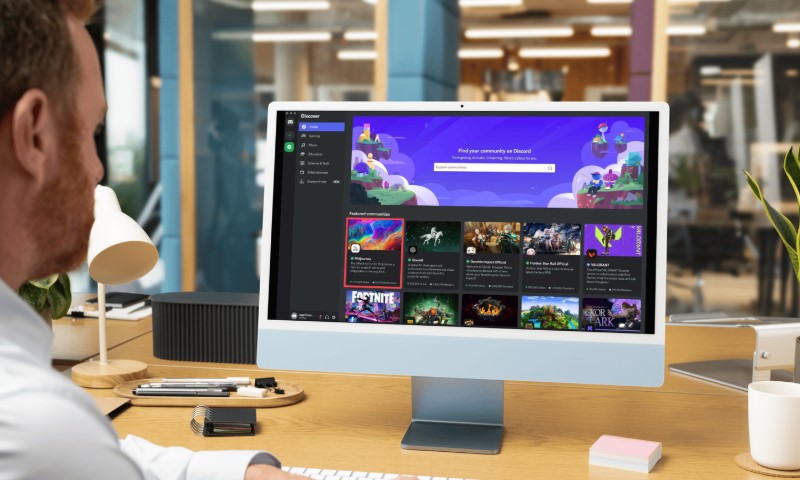
Midjourney launched its public beta in July 2022 and quickly gained attention for images that felt closer to digital illustration than stock photography. The system evolved primarily through Discord-based interaction, reinforcing a workflow focused on experimentation, iteration, and community-driven aesthetic norms.
Midjourney’s underlying models have consistently emphasized global composition, lighting, texture, and stylistic coherence over strict literal interpretation.
OpenAI released DALL·E 2 in April 2022, followed by DALL·E 3 in late 2023. DALL·E was designed with a different priority set: reliable prompt parsing, object placement, legible text rendering, and safe integration into broader productivity tools. Its development has been closely tied to downstream use cases such as design mockups, educational content, and controlled image modification.
Image Quality: Style, Realism, and Visual Cohesion
Midjourney consistently produces images with a stronger visual identity. Its outputs often feature cinematic lighting, deliberate color grading, and painterly textures, even when realism is requested.
This makes Midjourney images immediately recognizable and visually compelling, especially for fantasy scenes, editorial illustrations, and atmospheric environments. The trade-off is that Midjourney sometimes introduces stylistic elements that were not explicitly requested, prioritizing beauty over accuracy.
DALL·E focuses on clarity and correctness. Objects tend to appear exactly as named, relationships between elements are more stable, and scenes align more closely with real-world expectations unless otherwise specified. DALL·E images often look flatter or less dramatic than Midjourney’s, but they are easier to control and easier to explain to non-technical stakeholders.
Visual Output Comparison
| Dimension | Midjourney | DALL·E |
| Overall aesthetic | Strongly stylized, cinematic | Neutral, clean, literal |
| Lighting and color | High contrast, artistic grading | Natural, balanced |
| Composition | Globally cohesive, dramatic | Functionally correct |
| Consistency across variations | High visual identity | High logical consistency |
| Risk of artistic drift | Medium to high | Low |
Prompt Control and Interpretability
Prompt control is where the two systems diverge most clearly.
Midjourney uses a loosely structured prompt language supplemented by parameters such as aspect ratio, stylization strength, and chaos. While these controls are powerful, they require experience to use effectively.
Small wording changes can significantly alter results, and exact replication is difficult. This makes Midjourney ideal for exploration but less predictable for production pipelines that require repeatability.
DALL·E interprets prompts more literally and consistently. Complex instructions involving multiple objects, spatial relationships, or text content are handled more reliably. DALL·E 3, in particular, improved natural language parsing to the point where prompts can be written in plain English paragraphs without heavy parameter tuning.
Prompt Behavior Comparison
| Aspect | Midjourney | DALL·E |
| Literal interpretation | Moderate | High |
| Sensitivity to wording | Very high | Moderate |
| Parameter complexity | High | Low |
| Repeatability | Lower | Higher |
| Learning curve | Steep | Shallow |
In workflows that compare Midjourney and DALL·E outputs, a paraphraser is often used to normalize prompt phrasing and test whether differences in image quality stem from model behavior rather than wording bias.
Text Rendering and Object Accuracy
DALL·E has a clear advantage when images require readable text, accurate logos, or specific product-like layouts, which comes handy, if you are making a YouTube banner. This is the result of explicit training and alignment toward commercial and informational use cases. Menu boards, labels, signage, and educational diagrams are consistently more usable when generated with DALL·E.
Midjourney has improved text rendering over time, but still struggles with legibility and spelling accuracy, especially for longer strings. For creative posters or abstract typography, this may be acceptable, but it limits use in branding or instructional visuals.
Editing, Variations, and Iterative Control
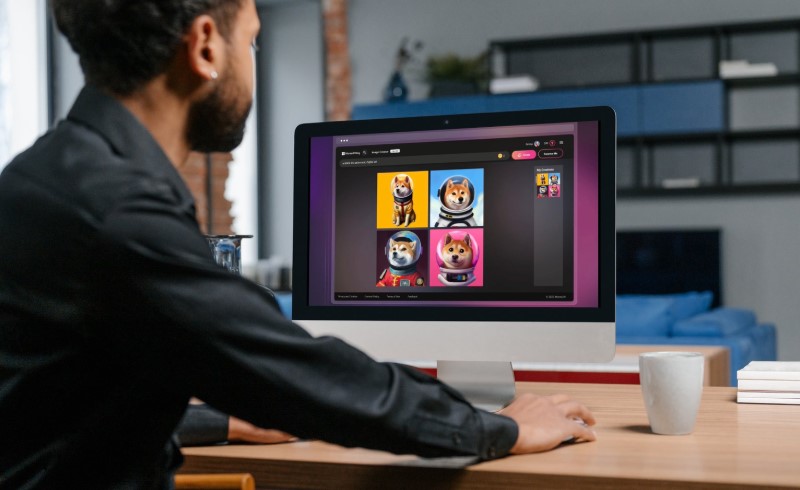
One of DALL·E’s strongest practical advantages is image editing. Users can regenerate specific areas, replace objects, or adjust elements while preserving the rest of the image. This makes DALL·E suitable for iterative workflows where incremental changes are required, such as marketing visuals or UI mockups.
Midjourney offers variations and rerolls but lacks fine-grained inpainting control. Each iteration is closer to a reinterpretation than a surgical edit. This reinforces Midjourney’s role as a creative generator rather than an image editor.
Editing Capability Comparison
| Capability | Midjourney | DALL·E |
| Partial image editing | Limited | Strong |
| Object replacement | Indirect | Direct |
| Consistency across edits | Medium | High |
| Suitability for revisions | Low to medium | High |
Typical Use Cases Where Each Excels
Midjourney performs best when the primary goal is visual impact. Concept art, book covers, album artwork, game environments, and editorial illustrations benefit from its stylistic bias. It is especially effective in early creative stages when direction is still fluid, and exploration matters more than precision.
DALL·E excels in tasks that require correctness and control. Product imagery, explainer visuals, educational diagrams, social media graphics with text, and internal presentations are areas where DALL·E’s reliability outweighs its more restrained aesthetic.
Best-Fit Use Case Matrix
| Use Case | Better Choice | Reason |
| Concept art | Midjourney | Strong visual identity |
| Fantasy illustration | Midjourney | Stylization strength |
| Product mockups | DALL·E | Object accuracy |
| Marketing visuals with text | DALL·E | Text reliability |
| Mood boards | Midjourney | Aesthetic cohesion |
| Educational diagrams | DALL·E | Clarity and structure |
Workflow, Access, and Ecosystem Considerations
View this post on Instagram
Midjourney’s Discord-centric workflow encourages rapid iteration but can be inefficient for structured teams. Asset management, versioning, and collaboration require an external organization. However, the community aspect has accelerated stylistic experimentation and shared knowledge.
This makes it easier to embed into existing workflows and automate image generation at scale. For organizations, this integration often matters more than raw visual flair.
Practical Bottom Line
Midjourney and DALL·E are not competitors in the traditional sense. They optimize for different outcomes.
Midjourney prioritizes visual richness and artistic interpretation, often producing images that feel finished and expressive.
DALL·E prioritizes control, clarity, and reliability, producing images that are easier to refine, explain, and deploy in practical contexts.