
A custom car wrap is adhesive vinyl applied over factory paint to change a vehicle’s look without a permanent repaint.
It can create a full-color change, add business branding, protect paint against UV rays and minor abrasions, or give the owner a reversible styling option.
Good wraps need more than a strong color.
A successful design must fit the vehicle’s shape, stay readable at road speed, use durable materials, follow local rules, and hold up under regular washing and weather.
Custom Wrap Design Basics
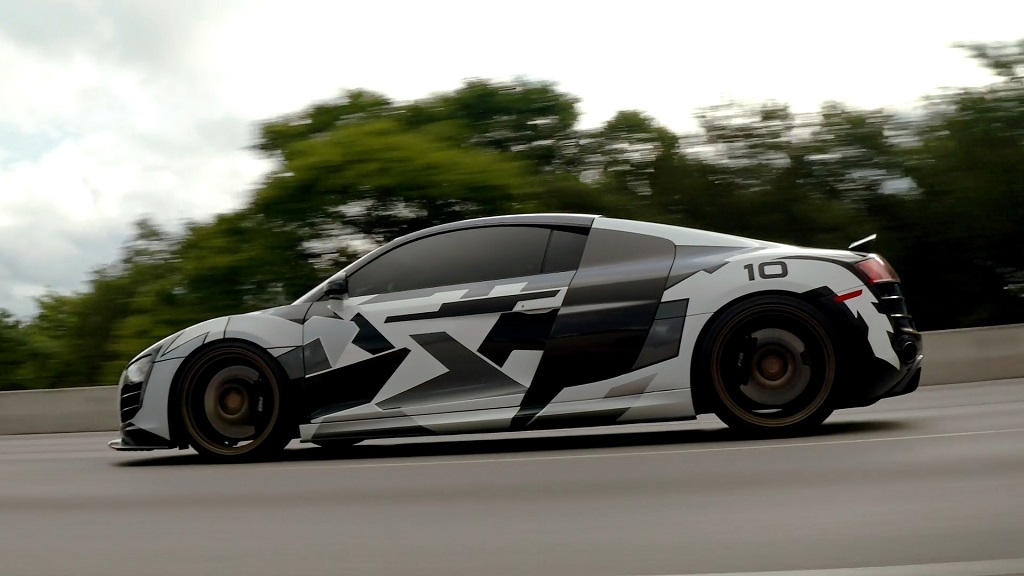
A good wrap starts with the vehicle’s body. Curves, panel gaps, hoods, roofs, mirrors, handles, doors, and bumpers should guide the layout.
Designs that follow body lines usually look cleaner and more intentional.
Vehicle type should guide finish and color choices. Sports cars can handle bold metallics, gloss finishes, racing details, and aggressive styling.
For example, high-performance SUVs seen in markets such as Urus hire Dubai often suit bold wrap choices like satin black, gloss black, carbon fiber accents, two-tone layouts, or aggressive color blocking because the body style already combines luxury proportions with sports-car styling.
Luxury sedans often look better with satin, pearl, gloss black, or subtle tones.
SUVs and trucks have larger panels, so stronger colors, two-tone layouts, and textured accents can work well.
A clear goal should come before material selection. Main wrap goals usually fall into a few practical categories:
- Personal color change for a new look without repainting
- Business branding for mobile advertising
- Paint protection against UV rays, light scratches, and abrasions
- Temporary promotion for events, product launches, or campaigns
- Accent styling for selected panels instead of a full wrap
Finish choice matters. Gloss vinyl looks closest to paint and is easier to maintain.
Matte vinyl gives a modern, non-reflective look but needs careful cleaning. Satin offers a balanced finish and can hide minor swirl marks better than gloss.
Metallic and chrome finishes create strong impact, but reflections can make them harder to control visually.
Color affects perception. Deep blue can suggest reliability. Red can suggest energy and confidence.
Metallic gold and chrome can suggest luxury. Matte black, satin gray, and pearl white work across many vehicle types because they feel clean and polished.
Some finish choices need more care after installation. Higher-maintenance options should be selected only when the owner is ready for extra upkeep:
- Matte finishes need different cleaning methods than gloss
- Chrome and metallic wraps can show fingerprints, streaks, and surface marks more easily
- Glitter, sparkle, and textured films can demand gentler washing
- Specialty finishes may age faster in constant sun without covered parking or UV-safe care products
Creative Options for Car Wraps
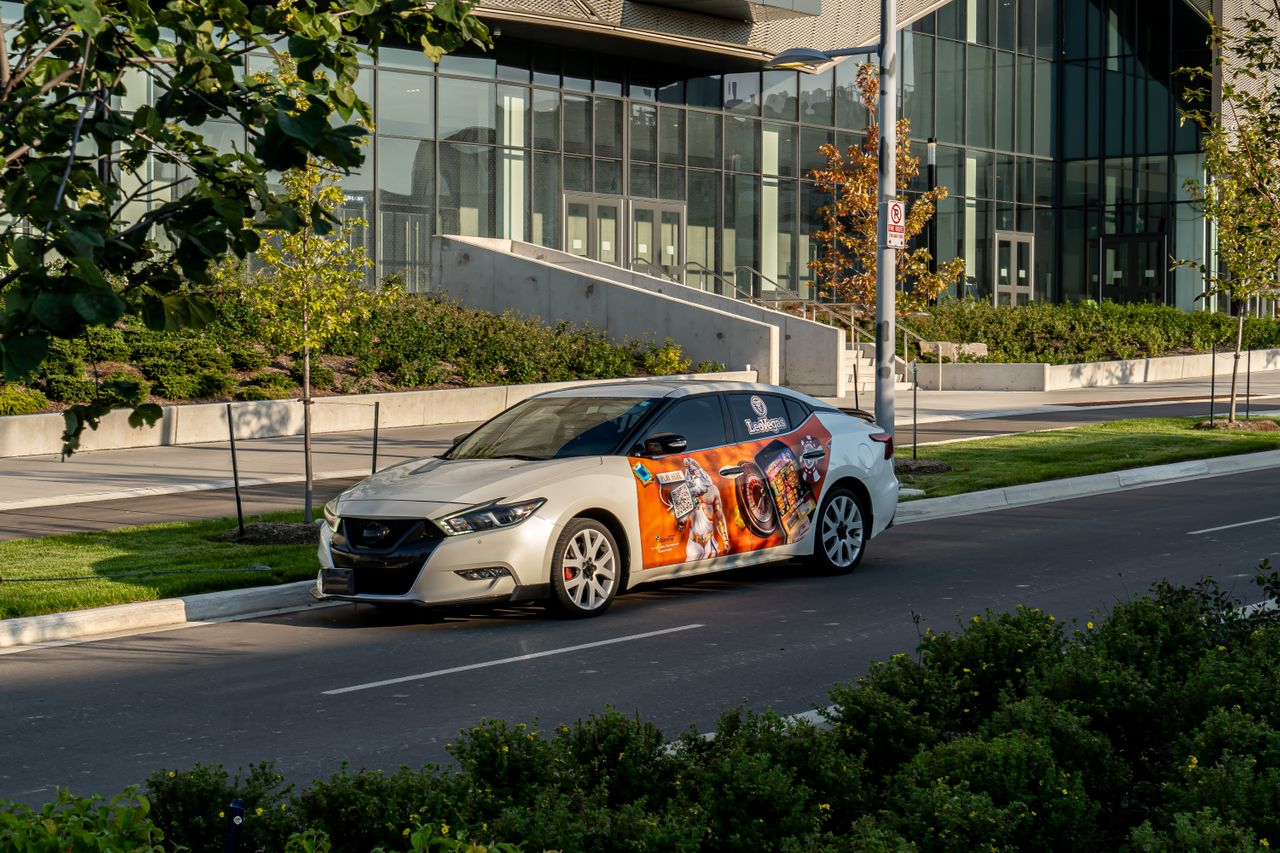
Full wraps cover the entire vehicle. They work best for complete color changes, uniform designs, major visual transformation, and broad paint protection.
Partial wraps focus on areas such as the roof, hood, mirrors, doors, bumpers, or accent panels. They are useful for contrast, two-tone designs, and lower-cost customization.
Commercial wraps use logos, brand colors, taglines, contact details, and promotional graphics.
For business vehicles, the brand should be the main message. A commercial wrap should help people identify the company quickly, not force them to read a crowded ad at road speed.
Creative treatments work best when each effect has a clear role in the design. Strong options include:
- Racing stripes for a performance-inspired look
- Gradients for controlled movement across large panels
- Color blocking for sharp contrast between body sections
- Two-tone layouts for a factory-custom appearance
- Color-shift or rainbow laser films that change with light angle
Accent textures should be used with control. Carbon fiber works well for sporty details. Brushed metal can create an industrial look.
Glitter and sparkle films are better for small light-catching areas. Satin black and gloss black work well on roofs, mirrors, splitters, trim, and other detail zones.
Creative designs still need structure. Character lines should act as break points. Color changes should support the vehicle’s proportions.
Complex effects should be limited so the wrap does not look cluttered.
Rules for Effective Vehicle Wrap Design
A vehicle wrap is often seen for only a few seconds, sometimes at road speed.
A useful test is simple: can the main message still be read at 50 MPH? If not, the layout is too crowded, too small, or too low contrast.
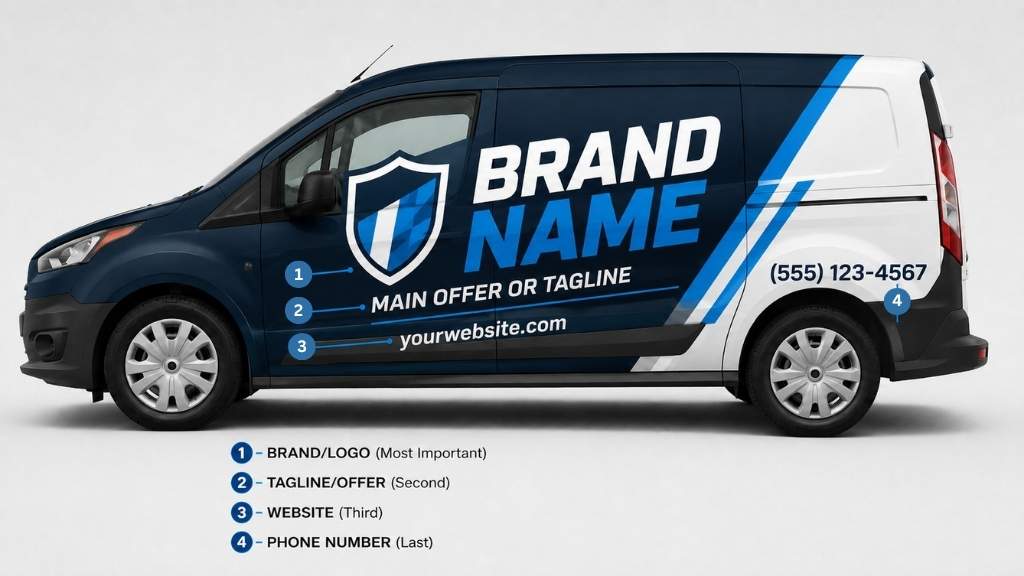
Business wraps need a clear visual order. Strong layouts usually guide the eye through this sequence:
- Brand name or logo first
- Tagline or main offer second
- Website URL third
- Phone number last
Copy should stay limited. Long service lists, social icons, legal suffixes like LLC or Inc., and QR codes often create clutter.
A vehicle wrap should work like a moving billboard, not a brochure.
Photos should be used carefully. A photo may explain the service category, but it often does little for brand memory. Strong colors, clean lettering, and a clear logo usually work better.
Visual noise weakens readability. Busy backgrounds, heavy effects, bevels, glows, flames, and excessive textures can make the wrap harder to remember.
Placement matters because vehicle surfaces interrupt graphics. Important text should avoid problem areas such as:
- Door handles and seams
- Sliding doors and panel gaps
- Curved bumpers and wheel arches
- License plate areas
- Sensors, mirrors, cameras, and trim breaks
Open vehicle panels make better advertising space.
Larger uninterrupted surfaces allow logos, names, and contact details to stay clean, visible, and easier to remember.
Legal Limits to Check Before Wrapping
@georgescarmedia Reply to @jbctr what do you have to do with a wrapped car to keep it legal on UK roads? #carwrap #thelaw #dvla #insurance #police #carscene #modified ♬ original sound – GCM
Local rules should be checked before choosing a final color, finish, or graphic concept.
Laws may affect color-change reporting, reflective materials, window visibility, commercial advertising, and emergency-style designs.
Color-change reporting is important. In the UK, a significant vehicle color change must be reported to the DVLA, and the V5C registration document must be updated.
Drivers in other locations should check the local DMV, DVLA, or vehicle authority before installing a full-color-change wrap.
Insurance should also be checked. A wrap may count as a vehicle modification, so the insurer should be told about it. Proper listing can help protect the wrap if the vehicle is damaged.
Reflective and emergency-style wraps need caution. Reflective materials may face restrictions in certain colors or designs.
Graphics that imitate police, ambulance, fire, or other emergency vehicles can create legal risk.
Required safety features must stay uncovered. A legal wrap plan should leave these parts visible and functional:
- License plates and VIN plates
- Headlights, taillights, and brake lights
- Reflectors and mirrors
- Cameras, sensors, and driver-assist equipment
- Windshields and front side windows that must meet visibility rules
Business wraps may also need to follow local advertising, parking, fleet, or permit rules. Leased vehicles require lease review before wrapping, and removal may be required before return.
Materials, Installation, and Durability
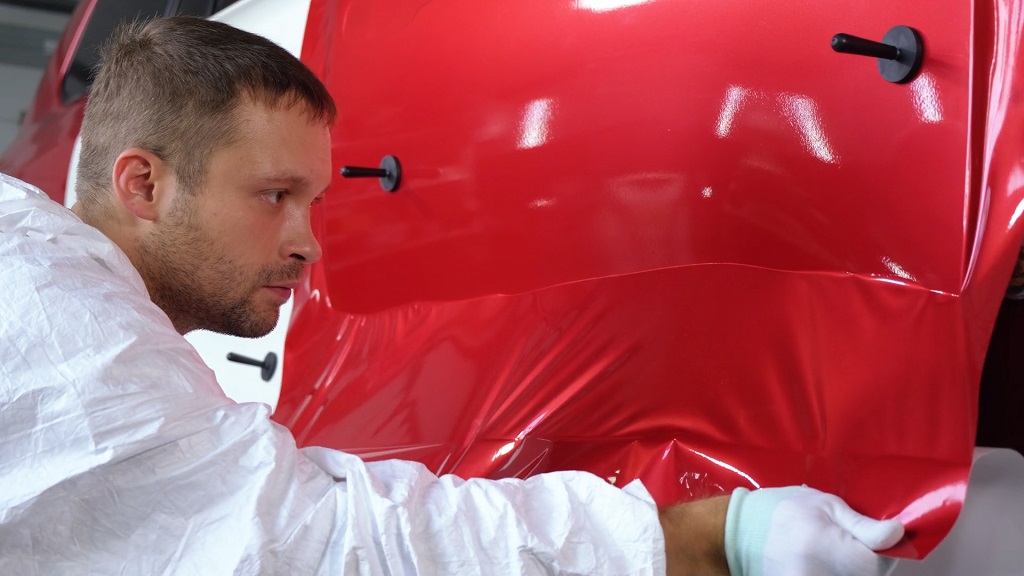
High-quality vinyl affects appearance, durability, and removal.
Trusted wrap brands include 3M, Avery Dennison, Oracal, and KPMF.
Premium cast vinyl works well on complex curves because it offers better conformability, color stability, UV resistance, and long-term performance.
Premium cast vinyl can keep its appearance for about five to seven years under normal conditions. Sun exposure, climate, parking habits, washing methods, and installation quality all affect lifespan.
Material should match the purpose. Common wrap materials have different uses:
- Color-change vinyl for style-focused projects
- Printed vinyl with laminate for graphics and advertising
- Paint protection film for chips, scratches, and environmental damage
- Colored paint protection film for protection plus customization
Printed wraps need laminate. Laminate protects graphics against UV damage, abrasion, and daily wear. Cast laminate conforms better to curves than cheaper alternatives.
Preparation is critical. Dirt, grease, wax, polish, and contamination must be removed before installation.
Chips, dents, rust, peeling paint, and other defects should be inspected because they can show through or weaken adhesion. Handles, badges, mirrors, and trim may need removal for cleaner edges.
Installation should happen in a clean, dust-free, temperature-controlled space. A common recommended range is about 60 to 75°F, or 15 to 24°C.
Another useful range is 60 to 80°F. Excess heat can overstretch vinyl, cold can make it brittle, and humidity can cause bubbles or adhesion problems.
Proper installation reduces lifting and bubbling.
Installers usually start on larger flat surfaces, work outward with a squeegee, use heat around curves and edges, trim cleanly, tuck edges, and post-heat complex areas.
Maintenance protects the wrap. Hand washing with pH-neutral or mild soap is safest.
Harsh chemicals and automatic brushes can damage edges or dull the finish. Touchless washes can work when pressure is moderate.
Shade, covered parking, and vinyl-safe UV protectants can help reduce fading.
Summary
A strong custom car wrap needs clear design, legal awareness, quality materials, skilled installation, and proper care. Good wraps follow the vehicle’s shape, communicate quickly, and avoid clutter.
Chrome, gradients, color-shift films, carbon fiber, printed graphics, and commercial branding can all work well when they support a clear purpose.
A wrap should improve the vehicle’s look, protect the paint, and make sense on public roads.